
How I Read
And how I write (or fail to)


My 6-year-old daughter Mira is a ravenous reader. In the morning, her younger sister hops out of bed, flees their bedroom, and searches for me or her mother. Mira searches for a book. Then she fends off our pleas to come downstairs for breakfast for as long as she can. She’ll read during every meal if we let her. She even reads a separate book while we read bedtime stories to her and her sister. She is booksmaxxing.
Watching Mira takes me back to my own childhood. When I joined my mother on shopping trips, I’d sit in the grocery cart and finish a book, then return it to the rack so that she could purchase a fresh one for the car ride home. At the library, I always maxed out my card. During the summer I never missed the “bookmobile”—a bus converted into a library—when it parked in our rural neighborhood for a couple of hours each week.
After a misspent adolescence (I was more likely to steal a book than read one), I entered university and was once again consumed by words, though I shifted almost entirely to academic articles and books. I remember one weekend where I read Inductive Inference and Its Natural Ground on Saturday and The Fragmentation of Reason on Sunday. (Ask me whether I got any action in college.) Grad school was similar except that on the weekends, partying replaced reading. I can probably count on two hands the number of novels I read during those blessed six years.
When I met my wife Meghan Nesmith—a brilliant novelist and prolific essayist—my heart returned to fiction. I was keen to get into her…mind, and I eagerly read the novels she recommended; one of my favorites was Fifteen Dogs by André Alexis. Meghan awakened me to new genres, leading me to replace classics with contemporary fiction. As my tastes widened, I became more picky. If I’m not enjoying a novel, I close it and start a new one—I abandon more books than I finish. (Obviously rational. Think of the opportunity costs. There are many more great books than you’ll ever find the time to read.) Occasionally, I hit a bad streak, reading several novels in a row that are barely worth finishing, and I announce dramatically to Meghan that I’m done with fiction. (And I am—for a month or two.)
A few years ago, I experienced severe brain trauma. I had kids. And I developed some terrible phone habits while those babies slept on top of me, spending unseemly amounts of time scrolling Twitter and TikTok. I was addicted, and my concentration was shot. I had to retrain myself. If an app was fun, I deleted it. I installed Freedom, blocking social media from my phone entirely and from my laptop for all but a brief window in the morning. But these precommitment devices were a ladder that, after climbing, I was able to kick away. When I read now, I feel no temptation to scroll. It helps that Meghan reads constantly and that work doesn’t interfere. My job, aside from teaching, is to read and write whatever the hell I want.
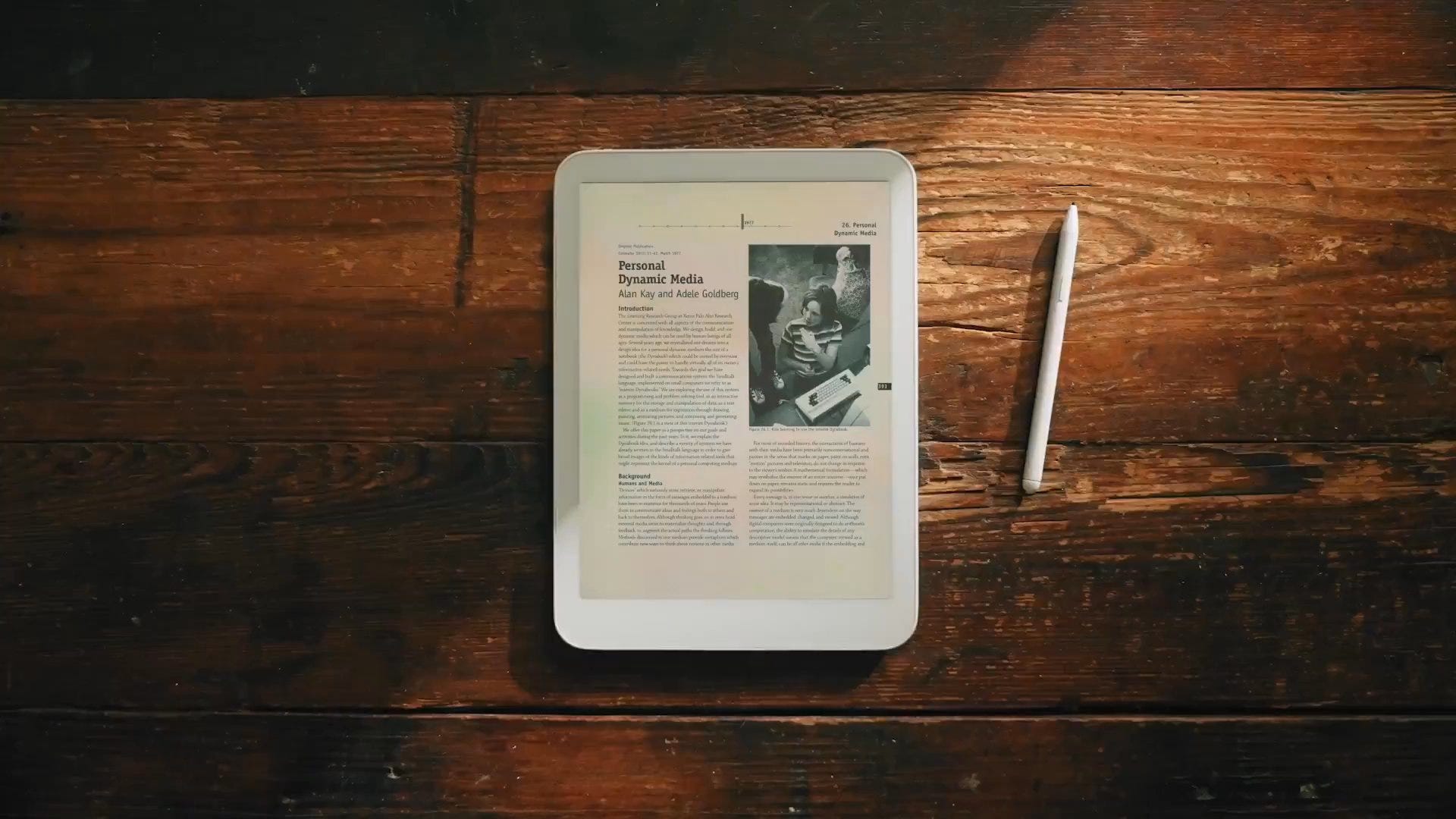
Nowadays, I usually have a novel on the go, but I read it only before sleep. Ninety percent or more of my reading is long-form essays. And my primary reading device—my favorite piece of technology—is a tablet called the Daylight Computer. Tyler Cowen writes, correctly, that it is “the best general reading device humans have ever invented.” It’s like a touchscreen e-reader but better—it runs an Android OS and has none of the lag that compromises e-ink devices. I read the Substack app, articles saved to Readwise Reader, and occasionally PDFs or EPUBs. Sometimes I have to open Chrome to access, uh, an archived website. But the fun apps are no fun. Daylight is a dumb tablet that makes you smarter.
Look at me, I’m so special, I read so much. Except that reading, while enormously pleasurable, isn’t intellectually transformative. It’s the highbrow equivalent of watching soap operas or eating junk food. Reading is passive, by default. You don’t learn anything unless you do something with the information you consume. Writing is thinking. Reading isn’t.
I recovered my reading skills quickly, but writing took (is taking) longer. Back in the day, as a PhD student and postdoc, I could churn out thousands of words of (tedious) prose a day. As I became disillusioned with academia, I all but stopped writing. (My productivity zeroed out when I realized nothing else I started writing would be completed in time to enter my tenure package.)
Even once I made the turn to public philosophy—writing op-eds with my friend Josh May, participating in workshops, and publishing a guest essay in the New York Times—I still wasn’t writing much. One problem is that public writing is so different from academic prose that you can easily get too precious about it. Over the years, I convinced myself that I can write well only in the morning, that I need to warm up by reading first, that I should turn to other work if I haven’t had a full eight hours of sleep. Pure cope.
I needed motivation. Starting a newsletter was just the thing. For the first few months, I wrote an essay almost every week. I slowed down after that but still managed to produce around 30 essays in 15 months on the platform. (Bentham's Bulldog writes that many in a month.)
Yet I still don’t write as much as I want to. My newsletter offers motivation but not a method. Left to my own devices, much of my reading becomes only passive pleasure. Essays on Substack or in The Atlantic are a treat—if they weren’t I wouldn’t finish them—but most pass right through me. When you open a book (or an app) with the goal of writing something, you read so much more attentively and do so much more thinking.
Even when I make the turn from reading to writing, I often miss my opportunity. If I don’t complete a draft in the first few days after inspiration strikes, the idea can quickly go stale. (I finagled an advance copy of The Score last fall and took detailed notes for a book review, but then I decided that I should read other reviews before drafting… Alas.)
Another bad habit is compulsively poring over half-written drafts. I waste hours re-reading my essays, my edits improving them only marginally—sometimes making them worse. Those essays do get published, but I pay a high price. (Opportunity costs again.)
Ironically, the device that helped restore my reading habits gets in the way of writing. With physical books you can write in the margins. With PDFs on a laptop you can highlight and take notes or pull up a document alongside. With the Daylight, though, the absence of other features is the point. The easiest thing is to pick up my phone and jot down ideas in the Notes app. But this isn’t ideal. I lose momentum going back and forth between devices. I’m liable to see amusing texts in one of my group chats or otherwise get pulled away. The reading, less focused, becomes less pleasurable too.
I have a new idea, a method for my motivation. It begins with dictation software that syncs across my devices. After reading something provocative, I open the app on my Daylight and dictate notes. Later, ruminating, I dictate more notes on my phone. This gives me the fodder for an essay. It’s also the first stage in a new conveyor belt. On day two, I look through my transcribed notes and write a first draft. To complete the process I need something else, a precommitment device to make up for my weakness of will: on day three, no more time than that, I make final changes and post—no endless, pointless editing.
Dictation enables motivated reading, as I approach an essay with a more active and thoughtful mind. It also helps with the actual writing, externalizing a large chunk of material immediately—dictation is of course faster than typing. The writing process is compressed and immersive, concentrating the thrill of intellectual obsession.
I don’t expect every series of dictated notes to grow into an essay; some will die naturally in the womb. And of course this system has limited application. It won’t work for projects that require long-term research or for collaborative essays with my lab. But another potential drawback is more pervasive.
I worry that dictation will interfere with the pleasure of reading. Reading isn’t thinking, but it’s a special experience that is valuable for its own sake—as Mira appreciates and as Meghan reminded me. Losing the pleasure of reading would be bad in itself, but it would also starve the very activity that inspires me to write.
I don’t know whether I’ll be able write more essays before the ideas go stale or whether reading will become less pleasurable. But I took my first shot after coming upon a sharp piece on reading by Sam Kahn. After dictating extensive notes, I wrote this essay the following day and edited it the day after. Let it pass right through you.
Really appreciated! One thing it made me think about, something I noticed about myself and my writing recently: I start writing so many essays that I don’t finish. This used to feel like a big defeat, because I was assuming that everything I begin to write I should complete into a polished essay. But more recently I was thinking about how artists probably sketch and paint a lot of stuff they throw away and never finish and how that’s probably a good practice, and this made me feel better about not finishing all the things I started. But I don’t know if I have ever really shaken the feeling that not finishing a novel I’m reading is some kind of failure….
Keep on writing Victor. I love everythinng you've written on your Substack, even when I disagree!