
How it Started vs. How it’s Going
My first nine months on Substack

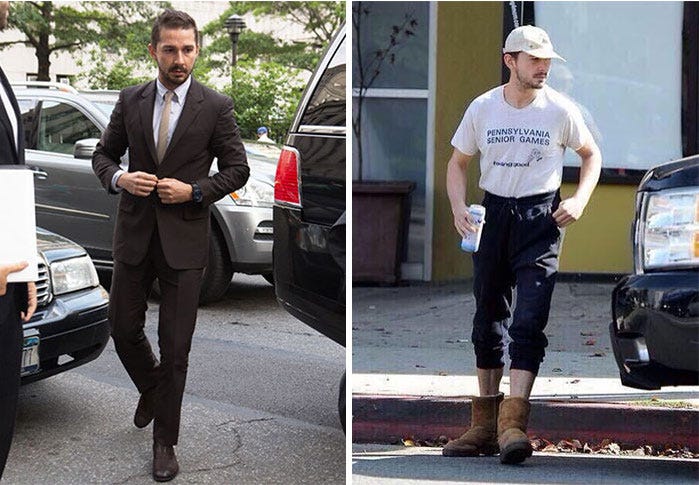
Years ago, I became disillusioned with academic philosophy. It wasn’t just that peer review is bullshit. Reading journal articles stopped bringing me pleasure, and I couldn’t see the point of producing the kind of writing that I had no desire to consume. What I loved was philosophy not just for philosophers but for curious, intelligent people in general.
I began changing tack by writing a crossover book with my old mentor and friend Richmond Campbell. We told a story about the evolution of morality, starting with our shared ancestors with apes and ending with moral progress over the last few centuries. After that, I wrote op-eds for some niche outlets like The New York Times and The Boston Globe.
During these years, my intellectual output dipped. I stopped caring about work that would enhance my professional status. This was also when Meghan and I had kids. Those babies robbed me of sleep and sense; I developed some appalling phone habits while they slept on top of me. After my book went to press in 2021, I mostly stopped writing. And when you stop writing, you stop thinking.
Things turned around in September 2024, when I took up a year-long fellowship at the Edmond and Lily Safra Center for Ethics at Harvard. There I workshopped my Aeon essay on depopulation in the fall and my opening Substack essay in the spring. I was candid at the Center about being a heterodox progressive, and the other fellows were kind enough not to cancel me. (Strangely, they all changed their phone numbers after the fellowship ended. Text me, guys!)
Why did I start a Substack? For one, the op-ed doesn’t allow for much depth or creativity. I wanted, sometimes, to begin an essay with a set piece that provokes curiosity, rather than disclosing the main argument right away. I didn’t want to have to send pitches into the void. And I wanted the freedom to write about whatever I felt like, from the nature of philosophy to my experiences with wokescolds on social media.
What I didn’t realize was that writing a Substack would also reignite my intellect. Over the first five months, I posted an essay nearly every week. I’ve always read a lot, but before, the words passed through me—my mind a sieve. Now, I keep dozens of running files in my notes app about topics I hope to write about. Before, spare moments were taken up by mindless scrolling. Now, they’re spent writing and editing. Substack brought my mind back to life. I gained autonomy over my work instead of being yoked to journal referees or newspaper editors. My essays here have less professional currency than journal articles, less reach than op-eds, but they’re more meaningful to me. (I’d give it all up for a byline in The New Yorker.)
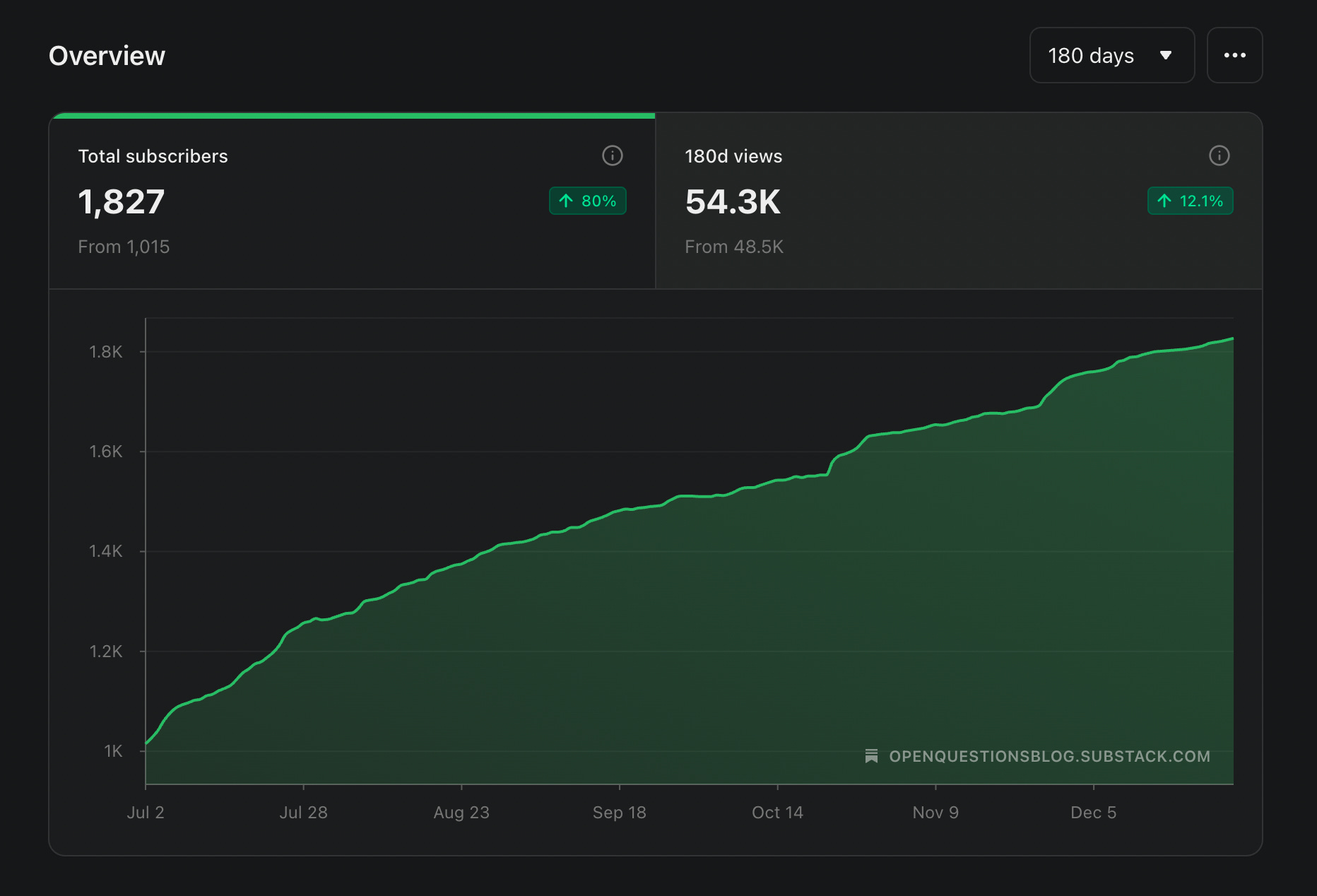
After my first three months on Substack, I posted an update about writing eleven essays and hitting 1,000 subscribers. Six months later, I’ve doubled my output to twenty-two essays and passed 1,800 subscribers. (Writing would not be so enlivening without an audience.) As teaching intruded this fall, my pace slowed even as each essay grew two or three times longer. I have only one course next semester, so I expect to write more often, but I’m tempted to privilege depth over frequency.
My wife Meghan Nesmith is a professional writer, editor, and philanthropist. (Marrying me was an act of charity). She offers editorial feedback on most of my writing. My brilliant friend Jacob Barrett helped me substantially improve a handful of essays. I think Paul Bloom is right that we should acknowledge the people who helped us with our ideas. One thing that sustained me during those fallow years was a project about animals and diets with my friend and long-time collaborator Josh May, and I plan to write some Substack essays with Josh and my fellow BU philosopher Derek Anderson in the new year. Philosophy is always secretly collaborative.
In my last update, I listed almost every Substacker I’ve been reading. This time I’ll just give an arbitrary cross-section. I’ve enjoyed reading fellow philosophy professors who also started Substacking in the last year: Daniel Muñoz, Andrew Sepielli, Daniel Greco, Kenny Easwaran, Amy Olberding, Michael Dickson, Brian Treanor, Josh May, Derek Anderson, Gus Skorburg, Rebecca Lowe, Michael Hannon, Robin McKenna, Oliver Traldi, and Barry Lam; and future philosophy professors, Bentham's Bulldog, Amos Wollen, Rafael Ruiz, Tino, and Flo Bacus; and veterans, Dan Williams, Nicolas Delon, Daniel Rubio, and Richard Y Chappell.
To those I failed to mention: Maybe think twice next time before inviting me to contribute to your edited volume? Or not inviting me? I find both extremely upsetting.
Looking back, here’s a roundup of my best essays from the past six months. Each falls under one of my four main obsessions.
1. Political tribalism:
How did American political culture get to the point where Trump continues to command so much support? Partly it’s because social media algorithms trap the left and the right in an intellectual race to the bottom.

2. AI:
The key to making intellectual use of LLMs is not to generate copy for others to consume but to stimulate and refine your own thought.

3. The left is wrong:
Why did trans progress lag behind gay progress? One reason is that the trans rights movement crested during a period when progressive politics was unusually extreme and intransigent.

4. Personal philosophy:
I got into philosophy because I had an incredible undergraduate professor. For a long time, I tried to teach like him—until I realized my mistake.

Coming soon:
Does it matter if trans people are born that way?
The politicization of AI
The case against doomerism
Ancient DNA and human sociality
The most meaningful thing you can do with your life
What should I do with this newsletter in 2026? Should I write more essays about human evolution? About parenting? How can I alienate more colleagues? Let me know in the comments.
Congrats on year one! Your depopulation post in particular was an inspiration for me. Really got me thinking (and, by turning me on to the estimable Dean Spears, got me to start interviewing people).
Would love to see what you and Derek come up with—and more generally, good luck with year two!
Great piece! I am working on my own year-end roundup and feel exactly the same way- I was thoroughly burned out on academic writing and am now reinvigorated by writing on here. Looking forward to year 2!